Teaching Team
- Dr. Luis Zapata Ortiz. Course leader, The Institute of Cancer Research (ICR), UK
- Dr. Alex Di Genova. Associate professor, Universidad de O’Higgins, Chile
- Dr. Alejandro Maass. Full Professor, Universidad de Chile, Chile
- Dr. Chloé Colson. Postdoctoral Training Fellow, ICR, UK
- Dr. Giulio Caravagna. Professor of Artificial Intelligence, University of Trieste, Italy
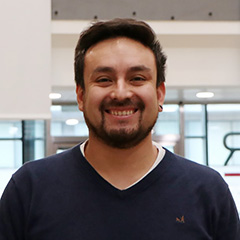 Dr. Luis Zapata Ortiz
Course leader, specialist in mathematical modeling and cancer evolution, PI Team Evolutionary Immunogenomics, The Institute of Cancer Research (ICR), London.
Dr Luis Zapata Ortiz is investigating the fascinating interplay between the immune system and genetic variability within our bodies using genomic technologies and algorithms for detecting these changes. He is a member of scientific societies, and has a broad network of collaborations in the UK, EU, USA, Chile and Latin America.
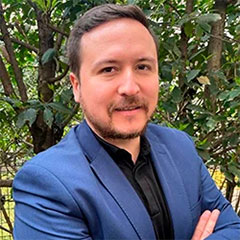 Dr. Alex Di Genova
Bioinformatics Engineer. PhD in Complex Systems Engineering from the Universidad Adolfo Ibáñez. Associate professor of computational biology at the Universidad de O’Higgins and associate researcher at the CMM. His research focuses on the development of new algorithms for the analysis of genomic data and characterizing genomic rearrangements in human cancers to understand mutational processes in disease progression. He has developed academic roles in computer science, algorithms and biotechnology, as well as participating in genomics projects of international relevance.
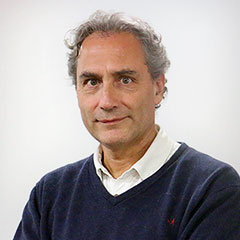 Dr. Alejandro Maass
PhD in Pure Mathematics. Full Professor at the Department of Mathematical Engineering of the Faculty of Physical and Mathematical Sciences at University of Chile, Director of International Relations of the Center for Mathematical Modeling (CMM) and associate researcher of the Millennium Institute Center for Genome Regulation. Appointed as Fellow-Ambassadeur by the CNRS (Centre National de la Recherche Scientifique) of France.
Dr. Chloé Colson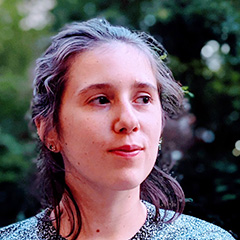
Postdoctoral Training Fellow, Genomics and Evolutionary Dynamics lab, The Institute of Cancer Research (ICR), Sutton.
Dr. Colson holds a DPhil in Mathematical Biology from the University of Oxford, where her doctoral research focused on the development and analysis of novel mechanistic models of tumour growth, invasion and responses to combinations of radiotherapy and hyperthermia. She is now working on taking a data-driven population genetics approach to studying cancer cell plasticity.
Course Objective
This course provides students with advanced and practical knowledge in mathematical modeling and data science/genomics applied to tumor evolution. It covers essential concepts for understanding biological systems, including how to represent them with mathematical models and analyze their asymptotic behavior. Practical examples related to cell growth and cell interactions will be explored.
Students will learn fundamental concepts of cancer evolution and population genetics, relating mathematical models and evolutionary theory to real data obtained from cancer patients. The course includes a practical session on building numerical schemes for ODEs and another session exploring stochastic branching processes to understand tumor-immune coevolution.
By combining theory and practice, the course promotes active participation and collaborative learning.